
PAPER TIGER - Review | Cannes Film Festival 2026

James Gray’s latest film certainly feels like it fits during the era of classic 1970’s studio-funded crime dramas, although not to the same standard as those. Featuring some of the best work from a street smart Adam Driver and book smart Miles Teller, as brothers where a misunderstanding leads to rising tensions between them and Russian gangsters. Even with a side storyline with Scarlett Johansson as Teller’s wife that ties with the film’s themes of the dangers from the public exposure of waste petroleum, its melodrama and major screentime felt like it took away from the haunting dynamic between the brothers dealing with the situation. Still, there’s enough memorable moments of Gray being patient with the grainy visuals to maintain masterful suspense, especially during an incredible shootout sequence near the end, that makes it a shattering but powerful display of an unintended response to the American Dream.

Still Courtesy – Neon
Set in 1980s New York, the story follows two brothers Irwin (portrayed by Miles Teller), a hardworking engineer, and Gary (portrayed by Adam Driver), a charismatic former police officer—as they pursue success and the promise of the American Dream. Their ambitions take a dangerous turn after a profitable waterfront cleanup project draws them into the orbit of the Russian mafia. As the stakes escalate, Irwin's wife Linda (portrayed by Scarlett Johansson) and their family become caught in the crossfire, forcing the brothers to confront the devastating consequences of their choices.
After the deeply personal coming-of-age drama Armageddon Time, James Gray once again turns his attention to the promises and pitfalls of the American Dream, this time filtering those ideas through the lens of a brooding crime thriller. Premiering in competition at the 2026 Cannes Film Festival, Paper Tiger sees the filmmaker revisiting the morally conflicted characters and family dynamics that have defined much of his career, while embracing the gritty atmosphere of classic American crime cinema from the 1970s.
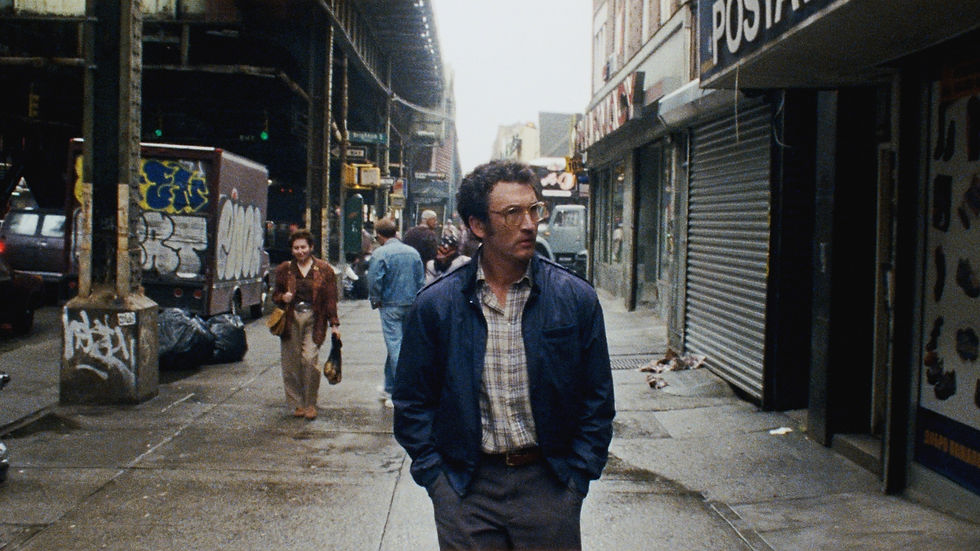
Drawing heavily from the era of studio-backed crime dramas that once dominated Hollywood, the film captures the same grounded tension and tragic sense of inevitability, even if it doesn't quite reach the towering heights of the genre's greatest classics. At its centre are two brothers whose pursuit of financial security quickly spirals into a dangerous confrontation with the Russian mafia after a seemingly minor misunderstanding. Adam Driver is outstanding as the more streetwise and impulsive sibling, bringing an unpredictable intensity to every scene, while Miles Teller provides the perfect counterbalance as the quieter, more intellectual brother whose moral compass is gradually tested. Their evolving relationship becomes the emotional backbone of the story, with Gray patiently allowing every disagreement and moment of distrust to simmer until it reaches devastating consequences.
Still Courtesy – Neon
The narrative occasionally loses focus through a substantial subplot involving Scarlett Johansson's character, the wife of Teller's brother, whose concerns over the public dangers of petroleum waste connect thematically to the film's wider commentary on corruption and societal decay. While those environmental undertones reinforce Gray's critique of the cost of unchecked ambition, the melodramatic nature of this storyline—and the amount of screen time devoted to it—sometimes interrupts the far more compelling dynamic between the two brothers. As a result, the central conflict loses some of its momentum whenever the film shifts away from the escalating psychological battle unfolding within the family.
Even so, Gray's assured direction consistently finds ways to build extraordinary suspense through restraint rather than spectacle. The grainy cinematography evokes the texture of vintage crime films, allowing every shadowy street corner and quiet conversation to feel laden with dread. That deliberate pacing makes the explosive shootout near the climax all the more gripping, delivering one of the film's most unforgettable sequences. By the closing moments, Paper Tiger reveals itself to be less interested in gangster mythology than in examining the devastating consequences of chasing prosperity at any cost, resulting in a haunting and emotionally resonant meditation on the darker side of the American Dream.
Verdict
7/10

Still Courtesy – Neon


Comments